

Methadone is one of the most popular medications used in treating opioid use disorders. It helps patients manage their withdrawal symptoms and substantially reduces overdose risk.
But it’s still a man-made narcotic with its limitations and side effects. Is one of these drawbacks the sort of tooth decay people associate with illicit drug use?
The short answer is that methadone doesn’t directly rot teeth. It does, however, cause some oral disturbances that could put patients at a higher risk of tooth decay.
Today’s post explores the effects of this synthetic drug on oral health, from saliva production to pH levels. We’ll also take a look at how patients can reduce the risk of decay and protect their teeth from cavities.
Exploring the Relationship Between Methadone and Tooth Decay
While the opioid agonist doesn’t directly cause tooth decay, it can create the “right” conditions (dry environment, low pH, etc.) for a range of dental issues. Patients opting for medication-assisted treatment (MAT) should be aware of these risks.
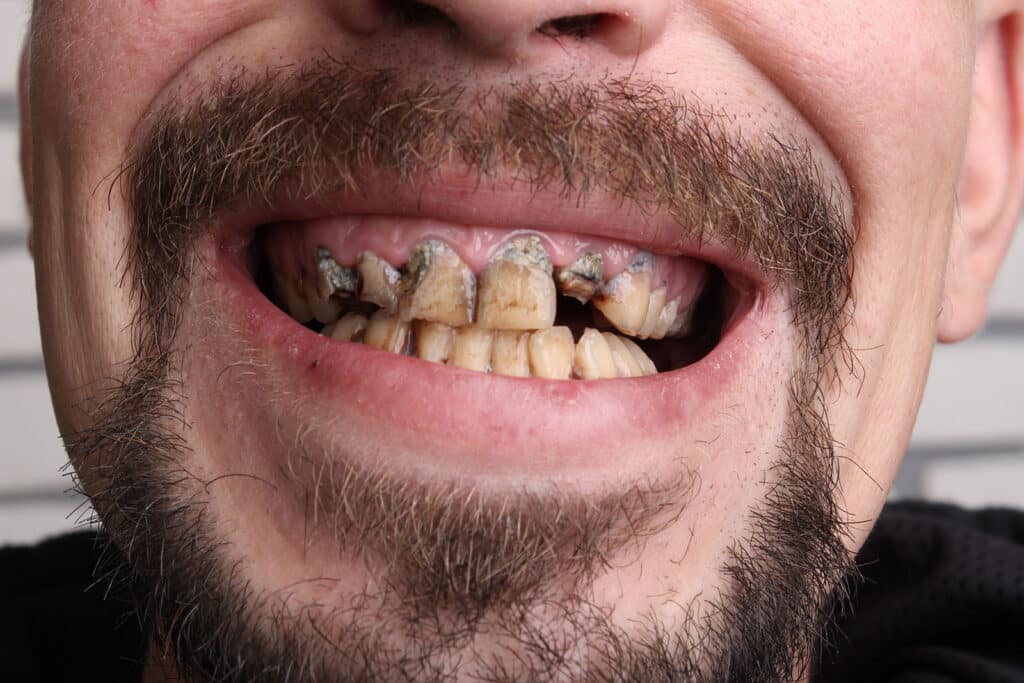
So, let’s take a closer look at the indirect relationship between the drug and tooth rotting.
Methadone Causes Dry Mouth
Xerostomia or dry mouth is a common side effect of methadone treatment. And dry mouth, by default, increases the risk of dental diseases.
After all, saliva is produced for a reason. Yes, it helps with digestion by breaking down certain foods. However, it also keeps the mouth moist, fights plaque-forming bacteria, and neutralizes the acid that can damage the teeth.
There are a few symptoms of dry mouth to look out for, including:
- Thick and/or sticky saliva
- Prickly, burning sensation
- Sensitivity to certain foods and drinks
Methadone Formulations May Be Acidic
You’ve probably heard that consuming too many acidic drinks (soft drinks, citric juices, etc.) is bad for your dental health. The reasoning here is that they can erode the hard outer layer on your teeth called the enamel.
The same principle applies to some oral methadone formulations that lower the pH level inside your mouth.
Side Note: Buprenorphine (sold in combination with naloxone under the brand name Suboxone) has a similar effect on oral pH.
Some MAT Programs Rely on Sugary Methadone Syrups
There are sugar-free methadone formulations on the market. Those are sold as oral concentrates without any sugar, dyes, or flavoring agents. Yet, some addiction treatment centers opt for the usual, syrup-like concentrates with high sugar content.
With proper oral hygiene, this sugar content shouldn’t be much of an issue, though. Remember that most substance use disorder patients take the opioid agonist only once or twice per day.
Methadone Maintenance Can Increase Sugar Cravings
The sugar content in the methadone formulation itself might not be a massive risk factor since the average dosing isn’t frequent enough. However, there’s a different side to the equation.
Methadone maintenance treatment (MMT) has been associated with an increased intake of sugary foods and beverages. This carbohydrate consumption pattern, in turn, can lead to a higher risk of both weight gain and dental caries.
Vitamin D Deficiency Is a Possible Complication Among MMT Patients
Studies show that metahone use as a part of MMT programs puts patients at a higher risk of developing vitamin D deficiencies. Drops in vitamin D stores in the body can lead to a number of issues, from musculoskeletal pain to periodontal/gum diseases.
Note that periodontitis and tooth rot aren’t the same thing, but they are related. For instance, they’re the two leading causes of tooth loss. That’s because healthy individuals have soft tissue and bones supporting the tooth, as well as soft tissue (gums) fitting snugly around the teeth.
Infections in this soft tissue or the bone can loosen teeth.
Poor Oral Hygiene Increases the Risk
Narcotic drug use can skew a person’s motivation and mental health.
With that in mind, it’s not hard to see how people suffering from addiction might not have the best dental care routines. It’s important not to blame methadone for the damage caused by long-term substance abuse.
Methadone vs. Meth: Effects on Dental Health
Before we check the protective tips, we have to draw a distinction between methadone and meth (methamphetamine).
While both drugs can dry the mouth, meth has much more dramatic effects on oral health—so much so that there’s a severe case of tooth decay called “meth mouth.”
One study looked at the overall dental health of meth users. The results showed that 96% had cavities and more than half had untreated tooth decay. A little over 30% had at least six missing teeth.
Meth users are also at risk of having blackened, stained, and crumbling teeth. In some cases, the teeth can’t be salvaged, and full removal is the only solution.
7 Tips for Protecting Your Tooth While on Methadone
After seeing the effects that methadone can have on oral health, you might hesitate to start a MAT program. But you shouldn’t. For many opioid addiction patients, the benefits of methadone treatment outweigh the risks.
Plus, there are steps and precautions that can help you reduce the risk of tooth decay. We recommend discussing your worries with your healthcare provider so that they can craft a dental care routine and integrate it into a holistic treatment plan.
Here are some of the most commonly recommended tips:
1. Increase Your Water Intake
Since dry mouth is a major concern, you can counteract its effects by drinking more water throughout the day.
2. Try Chewing Gum
Chewing gum can stimulate saliva production and flow, creating a stronger defence line against the acid.
Bonus points if you pick gum with xylitol. Although it’s a sweetener, it has been proven to prevent dental caries. That’s because it fights the acid attacks on the enamel and restores the tooth-friendly pH level.
Bacteria won’t ferment xylitol, either. So, the gum won’t contribute to the growth of the harmful bacterial population.
3. Rinse Your Mouth After Taking Your Doses
Make a habit of drinking water after taking your methadone dose. This will rinse the residues away to reduce the erosive action.
Side Note: Patients on supervised MATs will likely be asked to drink water after their doses anyway. Treatment providers do this to ensure that the dose has been swallowed.
4. Brush Your Teeth But NOT Immediately After Taking Methadone
Brushing your teeth regularly (at least twice a day) with a toothpaste containing proper fluoride content is highly recommended.
You shouldn’t, however, brush after taking your oral methadone dose. Remember that the drug is acidic. Brushing with the acidic residue still in your mouth will only increase the erosive action on the enamel.
It’s often better to brush before taking the dose. This way, you’ll remove the plaque and leave less of the bacteria that could react with the methadone lingering in your mouth.
5. Don’t Rely Solely on Mouthwash
It might be okay to use an antiseptic or a fluoride mouthwash if you do it right.
For one, you should know that it’s an addition and shouldn’t replace proper brushing. You’ll also have to use the mouthwash at a different time than your routine brushing.
6. Reduce Your Sugar Intake
Too much sugar in your diet will only speed up the decay.
When possible, choose water or other sugar-free drinks with your meals. And when you do drink something sugary, try to use a straw to direct the fluids away from your teeth.
7. Schedule Regular Check-Ups
Following the general preventative tips helps, but you’ll also need to consult a professional.
A dentist will tailor the dental care routine to your needs. They can also remove plaque build-ups when needed and help you stay on top of caries before the decay issue gets out of hand.
Other Side Effects of Methadone Use
Methadone is generally safe when taken as prescribed. However, there are some adverse reactions, and the list isn’t limited to dental issues.
Here are the potential side effects to watch out for:
- Lightheadedness and fainting
- Blurry vision
- Chest pain
- Fast or irregular heartbeat
- Slow breathing
- Sweating and clammy skin
- Itchy skin and hives
- Nausea and vomiting
- Constipation
- Mood changes
Not all side effects require immediate medical attention. But you should seek help right away if you notice any signs of allergic reactions, CNS depression, heart rhythm changes, low blood pressure, or low blood sugar.
Call 911 immediately if you believe someone has overdosed on methadone.
Explore Safe MAT Programs Today
Whether it’s based on methadone, buprenorphine, or something else, medication-assisted treatment can be a lifesaver for people with opioid dependency.
It’s a given that methadone, like all drugs, comes with adverse effects. Dry mouth is one of those unwanted effects, and it could eventually lead to tooth cavities and decay.
Still, the risk-benefit analysis sways addiction treatment providers to methadone treatment in many cases. The key is to be aware of the potential issues, stick to a dental care routine, and set realistic expectations.
For more information about safe methadone use in MATs, don’t hesitate to contact Recreate Life Counseling.
Written by: The Recreate Life Counseling Editorial Team
Published on: January 13, 2026
Updated on: January 13, 2026