
Feeling Stuck? There’s Hope.
It’s a tough spot to be in, isn’t it? You’ve been battling depression or addiction, feeling like you’re caught in a loop, and perhaps the usual routes haven’t quite delivered the lasting change you’re craving. You’re searching for something more, something effective, something that truly addresses the core of your struggle. You’re not alone, and the good news is, there’s an innovative, non-invasive treatment that’s changing lives: Transcranial Magnetic Stimulation (TMS).
When Traditional Paths Fall Short
You’ve likely explored therapy, perhaps medication, or even various recovery programs. While these are vital tools, sometimes they don’t quite hit the mark. It’s not a reflection of your effort; it’s often a sign that we need to look at the brain’s function itself. This is where TMS steps in, offering a precise and powerful approach when other avenues feel like they’re falling short.
What Exactly is TMS, and How Does It Work?
Imagine a symphony orchestra where some instruments are playing too loudly and others too softly, throwing the whole performance out of whack. That’s a bit like what happens in the brains of people struggling with depression or addiction – certain brain regions responsible for mood, reward, and impulse control aren’t communicating optimally. TMS gently re-tunes that orchestra.
A Gentle, Targeted Approach
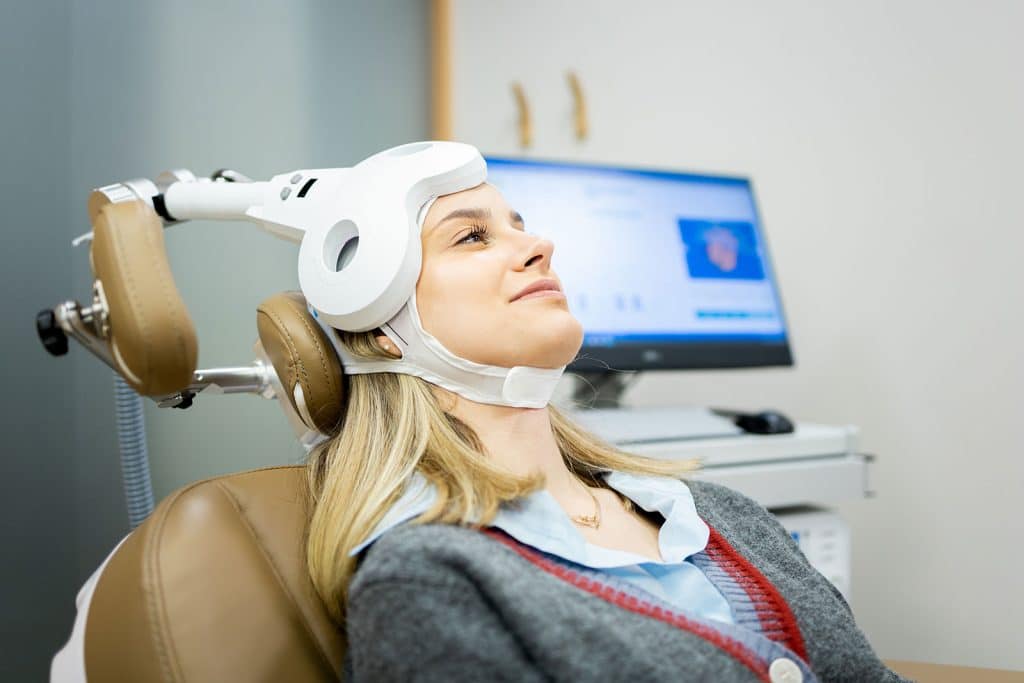
TMS—also called repetitive TMS or rTMS—is a form of non-invasive brain stimulation that uses magnetic fields to stimulate nerve cells in the brain1. This neuromodulation technique is performed on an outpatient basis, meaning no hospital stay is required—you simply return home after each session. Think of it like a very precise, external reset button. A device placed on your head delivers focused magnetic pulses, similar to those used in an MRI. These pulses are directed at specific parts of the brain known to be underactive in depression and addiction. There’s no surgery, no anesthesia, and you remain awake and alert throughout the treatment.
The Science Behind the Change
The magnetic pulses generate small electrical currents within the brain. These currents cause brain cells (neurons) to become more active. Over time, with repeated treatment sessions, this brain stimulation encourages these underactive areas to “wake up” and begin functioning more effectively. It’s like exercise for your brain, strengthening neural pathways and improving communication between different brain regions, ultimately leading to a recalibration of mood regulation and impulse control.
TMS for Depression: Reclaiming Your Life
Depression can feel like an oppressive fog, dimming everything you once enjoyed. You’ve tried to push through, but sometimes willpower alone isn’t enough when the brain’s chemistry is out of balance.

Beyond Medication and Talk Therapy
Potential benefit to mention that the standard of care AKA the gold standard aka the best we got right now is only effective in 42-59% from weeks 4 to week 12. Especially considering the time it takes to see benefits, the side effects begin to add up. That also leaves 40%-60% non responsive to treatment.
- The overall response rates for people on antidepressants were 42% after four weeks, 55% after eight weeks and 59% after 12 weeks. These were all higher than the rates for people on placebo; 29% after four weeks, 38% after eight weeks and 39% after 12 weeks. According to two studies, few people began to respond to antidepressants after taking them for 12 weeks2.
For those who haven’t found adequate relief, TMS offers a breakthrough treatment option. It directly targets the prefrontal cortex, the area of the brain responsible for mood regulation and executive function, which is often underactive in depressed individuals. By stimulating this region, TMS helps to restore healthy brain activity, lifting the fog and allowing you to see the world more clearly again3. Many people describe relief from depression symptoms like persistent sadness, lack of energy, and difficulty concentrating.
What to Expect During Treatment
With the latest protocols and our AMPA machine, we will be utilizing an accelerated iTBS protocol that is 3 minutes in duration4. It is shown to be “non-inferior” to the 20 minute session. Minimizing the amount of time the clients will be away from group sessions. You’ll sit comfortably in a chair, and a magnetic coil will be positioned over your scalp. You’ll hear a clicking sound and feel a tapping sensation, but it’s generally well-tolerated. Most treatment options involve daily sessions, five days a week, for several weeks. You can drive yourself to and from appointments and return to your normal activities immediately afterward. It’s a commitment, but the potential for profound, lasting change makes it incredibly worthwhile.
TMS for Addiction: A New Path to Recovery
Here’s something you probably know too well: even after detox, even after the physical withdrawal passes, the cravings remain. They show up uninvited—triggered by a smell, a place, a feeling—and suddenly you’re white-knuckling your way through another day. This isn’t weakness. This is your brain’s reward system stuck in overdrive, and it’s one of the most challenging aspects of recovery.

For comprehensive review of TMS in substance use disorders, see: https://www.nature.com/articles/s41386-023-01776-0
Why Cravings Persist (And How TMS Helps)
Addiction fundamentally changes how your brain communicates with itself. The parts responsible for impulse control and decision-making become disconnected from the reward centers. It’s like having a broken thermostat—your brain can’t properly regulate the “want it” signals anymore, even when you desperately don’t want to want it.
TMS works by restimulating these underactive control centers, helping to restore the balance. Think of it as reconnecting severed phone lines in your brain, allowing the “stop” signals to finally get through to the “go” impulses.
FDA Clearance for Addiction: What You Need to Know
Currently, the FDA has specifically cleared Deep TMS for smoking cessation5 6. Clinical trials showed that people who struggled to quit smoking—even after multiple attempts—experienced significant reductions in nicotine cravings and were more likely to stay smoke-free after TMS treatment7.
What about other substances? While FDA approval is specific to smoking, depression, and OCD, many TMS providers (including ours) offer treatment protocols for alcohol and opioid use disorders8. This is called “off-label” use—a common medical practice where doctors apply FDA-approved treatments to related conditions based on clinical research and judgment.
The research for these applications is promising, showing that TMS can:
- Reduce the intensity of cravings9, especially those triggered by cues (people, places, situations)
- Strengthen impulse control—the ability to pause and choose differently
- Help repair your brain’s natural reward system, so everyday pleasures feel rewarding again
TMS as Your Recovery Partner
Here’s what TMS isn’t: a magic eraser that makes addiction disappear overnight. Here’s what it is: a powerful tool that creates a window of opportunity. By quieting the neural static and reducing cravings, TMS makes the other parts of recovery—therapy, support groups, lifestyle changes—actually work better. It’s like turning down the volume on the cravings so you can finally hear yourself think clearly about what you truly want for your life.
Is TMS the Right Choice for You?
Considering a new treatment path can feel daunting, especially when you’ve already tried multiple approaches. But if you’re reading this, you’re already taking an important step—exploring your options and advocating for your own healing.

For treatment guidelines and clinical evidence, see: https://jamanetwork.com/journals/jamapsychiatry/fullarticle/2594387
Who Benefits Most from TMS?
TMS has emerged as an FDA-cleared treatment for major depressive disorder (MDD) and obsessive-compulsive disorder (OCD)10, with growing evidence supporting its use for substance use disorders. You might be an ideal candidate if you:
- Haven’t responded adequately to antidepressant medications or psychotherapy
- Experience treatment-resistant depression alongside substance use challenges
- Struggle with persistent anhedonia—that frustrating inability to feel pleasure or joy
- Want to avoid medication due to side effects, interactions, or personal preference
- Are motivated for recovery and ready to commit to a treatment schedule
- Face co-occurring conditions like depression and addiction that feed into each other
What You Need to Know Before Starting
Medical Evaluation is Essential
A qualified TMS provider will conduct a comprehensive assessment to determine if TMS is right for your specific situation. They’ll review your complete medical history, current medications, any previous treatments, and your treatment goals. This personalized evaluation ensures that TMS protocols can be safely tailored to your unique needs.
It’s Not for Everyone
Some individuals cannot undergo TMS due to medical conditions like epilepsy or implanted devices (like cochlear implants or certain metallic objects near the treatment area). Your provider will screen for these contraindications during your consultation.
Commitment Matters
TMS requires consistency—typically daily sessions over 4-6 weeks. While each session is relatively brief, the time commitment is real. However, many patients find that scheduling becomes routine, and the investment of time pays dividends in how they feel.
TMS Technology Used
At Recreate Behavioral Health, TMS is delivered using the AMPA Health TMS system, a clinically validated device known for precision and patient comfort.
Moving Forward with Realistic Hope
Here’s the truth: TMS isn’t a magic solution that instantly erases depression or addiction. Recovery is complex, especially when substance use disorders and mental health conditions intertwine. What TMS offers is a scientifically-backed intervention that can meaningfully improve your brain’s functioning, making the rest of your recovery work more effective.
Think of it this way—TMS helps restore the brain’s ability to regulate mood, experience pleasure, and control impulses. These improvements create space for you to engage more fully in therapy, build healthy habits, and reconnect with what matters most in your life. It’s one powerful tool in a comprehensive toolkit for healing.
The combination of TMS with behavioral therapy, strong support systems, and lifestyle changes offers the best outcomes. This isn’t about replacing the recovery work you’re already doing—it’s about enhancing your brain’s capacity to benefit from that work.
What to Expect: Patient Experiences and Outcomes with TMS
Understanding what others have experienced during TMS treatment can help you set realistic expectations and feel more prepared for your own journey. While every person’s experience is unique, clinical research and addiction medicine practice reveal consistent patterns in how patients respond to this therapy.

How Patient Progress is Measured
TMS providers use several evidence-based tools to track your progress throughout treatment, ensuring the therapy is working effectively for your specific situation:
- Visual analog scales for cravings: You’ll rate the intensity of your substance cravings on a numbered scale, typically before and after sessions
- Self-report questionnaires: Standardized assessments track changes in mood, energy, motivation, and overall functioning
- Self-reported substance intake: Honest tracking of your recurrence of use cases helps providers understand patterns and adjust treatment
- Mood and depression inventories: Regular check-ins measure improvements in symptoms like anhedonia, hopelessness, and anxiety
These measurements aren’t about judgment—they’re tools that help your treatment team understand what’s working and make adjustments when needed.
The Treatment Experience: What Sessions Feel Like
TMS treatment typically involves consistent sessions over several weeks, with the number of sessions and frequency and intensity of pulses tailored to your individual needs. Most protocols include:
- Daily sessions (usually 5 days per week) for 4-6 weeks
- Each session lasts 20-40 minutes, depending on the protocol
- The number of delivered pulses varies based on your treatment plan—providers adjust these parameters based on your response
During sessions, you’ll feel a tapping or clicking sensation on your scalp. Most patients describe it as slightly uncomfortable initially but quickly becoming routine. Common mild side effects include temporary scalp discomfort or mild headaches, which typically decrease as treatment progresses.
Timeline of Improvement: What Research Shows
Based on clinical studies and meta-regressions analyzing patient outcomes, here’s what many people experience:
Weeks 1-2: Some patients notice subtle shifts—perhaps slightly better sleep, reduced irritability, or brief moments where cravings feel less overwhelming. Others don’t notice changes yet, which is completely normal.
Weeks 2-4: This is when something often shifts. You might catch yourself laughing at a joke—really laughing—for the first time in months. Or you realize you haven’t thought about using all morning. Research indicates measurable changes in brain connectivity during this period11, particularly in circuits controlling impulse regulation and reward processing. For many in patients undergoing treatment, this is when the changes become undeniable.
Weeks 4-6 and beyond: Continued treatment works to restore dopamine tone and help rebuild your brain’s pleasure system12—the neural circuits damaged by prolonged substance use. Patients often describe:
- Increased energy and motivation for daily activities
- Greater ability to experience natural pleasures (time with loved ones, hobbies, nature)
- Improved capacity to engage fully in therapy and recovery work
- Reduced intensity and frequency of cravings
- Better emotional regulation and stress management

Setting Realistic Expectations
It’s important to understand what TMS can and cannot do:
TMS is not a “magic cure” that instantly eliminates addiction or makes cravings disappear overnight. Research in addiction medicine shows that TMS works best as part of a comprehensive treatment approach—combined with behavioral therapy, support systems, and sometimes medication-assisted treatment.
What TMS can offer: Many patients experience meaningful improvements that create what clinicians call a “window of opportunity”—a period where the brain’s reward circuits are functioning better, making it easier to engage in recovery work, resist cravings, and build healthy habits.
The complexity of co-occurring conditions: Substance use disorders rarely exist in isolation. Depression, anxiety, trauma, and other mental health conditions are often intertwined with addiction. TMS addresses both the addiction-related brain changes and co-occurring depression, which is why many patients report improvements across multiple areas of their lives.
Individual Variation Matters
Your experience may differ from others based on:
- The specific substance(s) you’ve used and duration of use
- Presence of co-occurring mental health conditions like bipolar disorder
- Your overall physical health and lifestyle factors
- How your brain specifically responds to the treatment parameters
- Your engagement with concurrent therapies and support systems
Providers adjust the frequency and intensity of pulses, along with the number of delivered pulses per session, based on your motor threshold and response—meaning your treatment is personalized to your brain’s needs.
Beyond Symptom Reduction
While self-report questionnaires and visual analog scales measure quantifiable outcomes like craving intensity and self-reported substance intake, many patients describe changes that are harder to measure but equally important:
- A renewed sense of hope about recovery
- Improved relationships with family members
- Ability to focus on long-term goals
- Reduced feelings of shame and helplessness
- Greater confidence in their ability to maintain sobriety
The Importance of Ongoing Support
TMS outcomes improve significantly when combined with comprehensive addiction treatment. Even with improvements in connectivity and dopamine tone, lasting recovery requires:
- Continued behavioral therapy and counseling
- Strong support networks (family, peers, 12-step programs)
- Lifestyle changes that support brain health
- Sometimes maintenance TMS sessions to sustain improvements
Key Takeaways:
Your journey with TMS will be uniquely yours, but you won’t walk it alone. Regular monitoring through standardized assessment tools ensures your treatment team can track progress and make adjustments. While research shows promising outcomes for many patients—particularly in reducing cravings, improving mood, and supporting recovery—remember that TMS is one powerful tool in a comprehensive approach to healing from addiction and co-occurring depression.

The Science Behind TMS: FDA Clearances and Research
TMS isn’t new or experimental—it’s backed by decades of research from institutions including the National Institutes of Health (NIH)13 and leading university departments of psychiatry. Ongoing research in neuroscience continues to expand our understanding of how this form of neuromodulation affects the brain. The Food and Drug Administration has cleared14 TMS devices for treating:
- Major Depressive Disorder (MDD): For patients who haven’t found relief from antidepressant medications
- Obsessive-Compulsive Disorder (OCD): Using specialized coils to reach specific brain structures
- Smoking Cessation: To reduce cravings and support tobacco cessation
- Migraine Prevention: For acute and preventive migraine treatment
For substance use disorders beyond smoking, many providers (including our clinic) offer TMS based on promising clinical trials and growing research evidence published by the NIH and other research institutions (gov sources). This “off-label” approach is common in health care—using TMS as a treatment option for related conditions based on clinical judgment and scientific support. Since depression and addiction so often occur together, addressing the brain changes underlying both conditions can provide comprehensive relief.
Frequently Asked Questions About TMS
You’ve got questions, and that’s natural. Let’s tackle some common ones.
Is TMS safe?
Are there any side effects?
How long does TMS treatment last?
Will my insurance cover TMS?
How is TMS different from ECT (electroconvulsive therapy)?
Are there different types of TMS?
What conditions is TMS FDA-cleared to treat?
Ready to Explore a Different Path?
You’ve tried medication. You’ve been to therapy. You’ve shown up for recovery even when it felt impossible. That kind of persistence deserves to pay off.
If you’re tired of feeling stuck—tired of fighting the same battles with depression or cravings day after day—TMS might be the breakthrough you’ve been working toward. This isn’t about giving up on what you’ve been doing; it’s about finally giving your brain the support it needs to make those efforts work.

Schedule Your Consultation
Take the next step in your recovery journey. Contact us today to schedule a comprehensive consultation where we’ll:
- Answer all your questions about how TMS works and what to expect
- Review your treatment history and assess if TMS is right for you
- Discuss insurance coverage and any needed referrals
- Create a personalized treatment plan tailored to your specific needs
You’ve already proven you have the courage to keep looking for answers. Let us help you find one that finally works.
You deserve to feel better. You deserve a life where cravings don’t run the show and depression doesn’t dim every moment. We’re here to help you get there.
Medical Disclaimer:
The content on this page is for informational purposes only and does not constitute professional medical advice, diagnosis, or treatment. FDA clearances for TMS are specific to Depression, OCD, and Smoking Cessation. Use of TMS for other substance use disorders is considered “off-label” and based on independent clinical judgment. Always seek the advice of your physician or qualified health provider with any questions you may have regarding a medical condition.
Medical Citations:
- https://pmc.ncbi.nlm.nih.gov/articles/PMC7732158/ ↩︎
- https://evidence.nihr.ac.uk/alert/a-fifth-of-people-who-have-no-improvement-on-antidepressants-at-four-weeks-respond-if-given-more-time/ ↩︎
- https://jamanetwork.com/journals/jamapsychiatry/fullarticle/2594387 ↩︎
- https://pubmed.ncbi.nlm.nih.gov/35609816/ ↩︎
- https://www.accessdata.fda.gov/cdrh_docs/pdf20/K200957.pdf ↩︎
- https://pmc.ncbi.nlm.nih.gov/articles/PMC8864803/ ↩︎
- https://www.medscape.com/viewarticle/936234 ↩︎
- https://www.nature.com/articles/s41386-023-01776-0 ↩︎
- https://www.nature.com/articles/s41380-025-03024-x ↩︎
- https://pmc.ncbi.nlm.nih.gov/articles/PMC8864803/ ↩︎
- https://bmcpsychiatry.biomedcentral.com/articles/10.1186/s12888-023-05033-y ↩︎
- https://www.nature.com/articles/s41386-023-01776-0 ↩︎
- https://pmc.ncbi.nlm.nih.gov/articles/PMC8864803/ ↩︎
- https://pmc.ncbi.nlm.nih.gov/articles/PMC8864803/ ↩︎